By Laura Millar, MPH, MA | Sexual health educator, public health professional, and cofounder of the Blind Sexuality Access Network
Featured image description
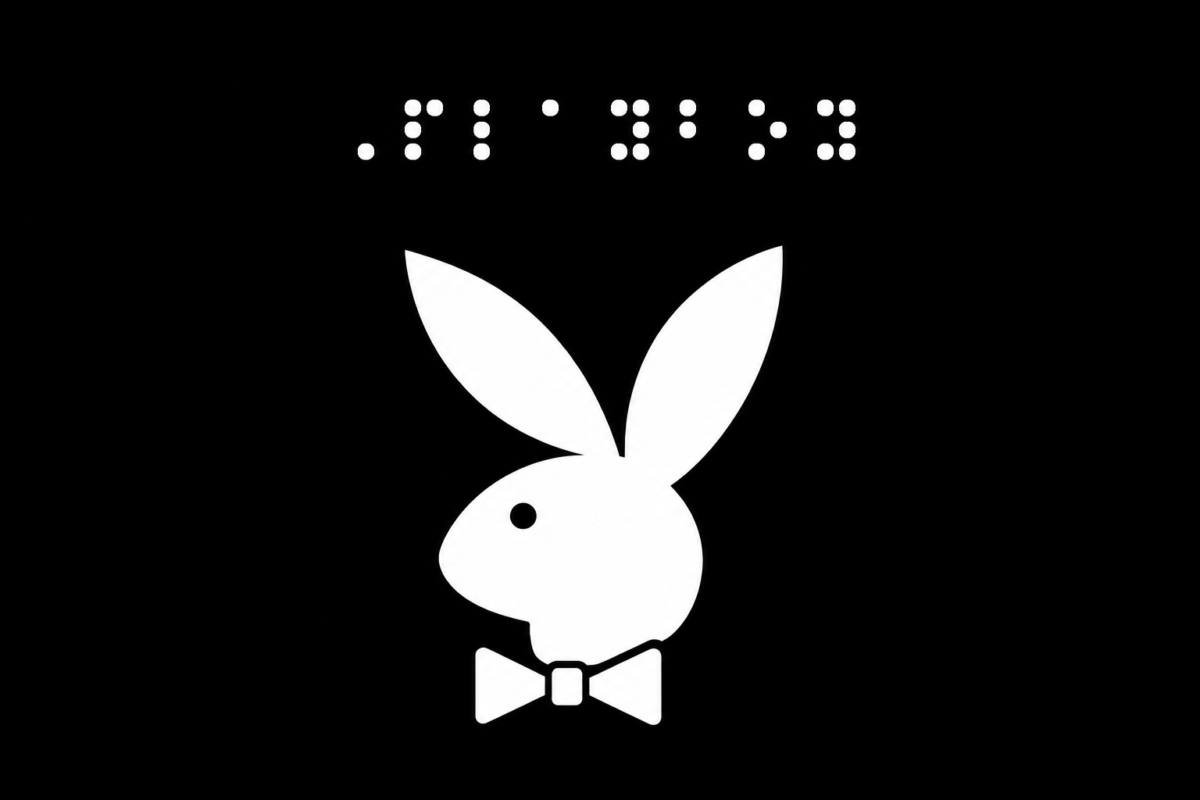
On a black background, white braille dots spell “Playboy.” Below the dots, a white rabbit faces left. It has two long ears, a black eye, and a white bow tie. The title appears only in braille.
Andrew Leland’s article, “The Fight to Keep Playboy in Braille,” published in Playboy on September 26, 2026, tells a remarkable story about censorship, braille, and the power to choose what we read. I want to share it because the story goes beyond a single magazine. It asks who gets to decide what blind people should be allowed to access.
As a blind-positive and sex-positive sexual health and public health professional, my position is straightforward: if something is available to the general public, it should also be accessible and available to blind and print-disabled people.
Not just when the content is educational. Not just when someone finds it respectable. Not just when a public official, publisher, or advocate approves of its sexual content.
The story Leland tells
Starting in 1973, the Library of Congress made a braille edition of Playboy available through its national library program for blind readers. It reproduced the text, but not the images. As Leland explains, people subscribed for different reasons. Brian Charlson, for example, loved its science fiction and enjoyed the conversations sparked by carrying the magazine on public transit.
In 1985, Congress cut $103,000 from the library program’s budget, matching the cost of producing braille Playboy. The Librarian of Congress stopped the edition. Blind readers and organizations challenged that decision. In American Council of the Blind v. Boorstin, Judge Thomas F. Hogan ruled from the bench on August 28, 1986, that the decision to discontinue it was unconstitutional viewpoint discrimination. His written opinion followed on September 23. The braille edition resumed in January 1987.
Notice the distinction. The court did not say that every publication must receive a government subsidy. It found that the Librarian of Congress could not exclude this publication from an existing access program on the basis of disapproval of its viewpoint. That distinction is central to this history.
Access is not an endorsement, and it is not a morality test
I am not asking anyone to like Playboy. We can criticize its representations of gender, sexuality, and bodies. We can disagree with its editorial choices. We can choose not to read it. None of that requires taking away another blind adult’s ability to make the same choice available to sighted readers.
We should not have to prove that a magazine is sufficiently wholesome, educational, literary, or politically acceptable before we are granted access to it.
It is telling how often people defend the braille edition by pointing out that Playboy published respected writers and serious interviews. Those are real parts of its history. But I do not want us to win the access argument only by insisting that blind readers were interested in the articles. Some were. Others may have wanted sexual content. Adults should be permitted to make their own choices.
The ordinary age restrictions and legal rules that apply to everyone should apply to blind people, too. What should not exist is an additional layer of moral gatekeeping because our access requires braille, audio, digital text, or image descriptions.
This is sexual ableism
Sexual ableism is not limited to denying that blind people have sex. It also appears in the assumption that we are innocent, asexual, uninterested in erotic media, or incapable of deciding what is appropriate for ourselves.
It is present when sexual-health information is withheld because someone feels uncomfortable providing it. It is present when an accessible version offers only the supposedly respectable parts of an experience. And it is present when we are told to be grateful for partial access rather than expecting the same breadth of choices everyone else has.
As a public health professional, I see the connection to information equity, sexual autonomy, dignity, and the right to make informed decisions. Access is part of the infrastructure that makes those rights meaningful. Moral approval is not a prerequisite for accessibility.
What about the pictures?
The original braille edition did not reproduce the magazine’s photographs. Leland reports that when he later visited Playboy’s website with a screen reader, photographs had no meaningful alternative text. The words might be available, but an entire visual dimension was still missing.
He also describes a suggestion from blind writer M. Leona Godin: invite models to describe their own images, or have skilled describers do so. The point is not that every reader wants the same thing. It is that image description can be imaginative, engaging, specific, and even erotic. Accessibility does not need to drain the experience of its meaning.
“It’s long past time for the blind to read Playboy for the pictures.”
Andrew Leland, “The Fight to Keep Playboy in Braille”
That line captures something I want publishers, educators, technology companies, and public health organizations to understand. Equal access is not simply being able to get a few facts from the text. It is having the ability to participate in culture, pursue pleasure, encounter ideas, and decide for ourselves what interests us.
If we want to combat sexual ableism, our job is not to act as moral gatekeepers. It is to remove access barriers and respect blind people’s choices.
Read Leland’s reporting
Andrew Leland, “The Fight to Keep Playboy in Braille,” Playboy, September 26, 2026 (Fall 2026 print issue). The historical court decision is American Council of the Blind v. Boorstin, 644 F. Supp. 811 (D.D.C. 1986).
The Blind Sexuality Access Network catalogs reading on disability justice and sexual autonomy. Find Andrew Leland’s article in BSAN’s Adult Pleasure and Intimacy collection.
Bring this conversation to your organization
If a blind reader opened your sex education curriculum, magazine, or patient materials today, what would they get to read, and what would they miss?
I work with educators, publishers, and public health teams on questions like these. In a workshop or consultation, we can look at a lesson, article, or resource you already use and identify where blind people lose access to information about sexuality, pleasure, and consent.
Tell me what you’re working on, who it’s for, and one barrier you’d like us to address together.
For coaching or workshop inquiries, you can also request a free 15-minute introductory conversation.
About the Author
Laura Millar, MPH, MA, is a blind, queer sexologist, sociologist, sexual health educator, and public health professional with more than 20 years of experience working at the intersection of sexuality, disability justice, and consent culture. She was named the 2025 Carrie Buck Distinguished Fellow at Brandeis University’s Lurie Institute for Disability Policy and leads the Blind Sexuality Access Network.
Through Laura Millar Consulting, she works with individuals, educators, organizations, and media makers to challenge sexual ableism and advance accessible, affirming sexual-health education. Laura is available for consulting, organizational training, workshops, speaking, and collaborative projects. Get in touch to discuss working together.
Get new posts by email
Interested in more writing about sexuality, access, consent, public health, and disability justice? Subscribe to receive my new articles by email. Enter your address below, select Subscribe, and confirm the subscription using the email you receive.
AI disclosure and image credit
I used AI to support research, drafting, and editing for clarity and accessibility, and to create the featured illustration under my direction. The perspective and interpretation are mine, and I am responsible for the final text. The links above take you to Andrew Leland’s reporting and the court decision I discuss.