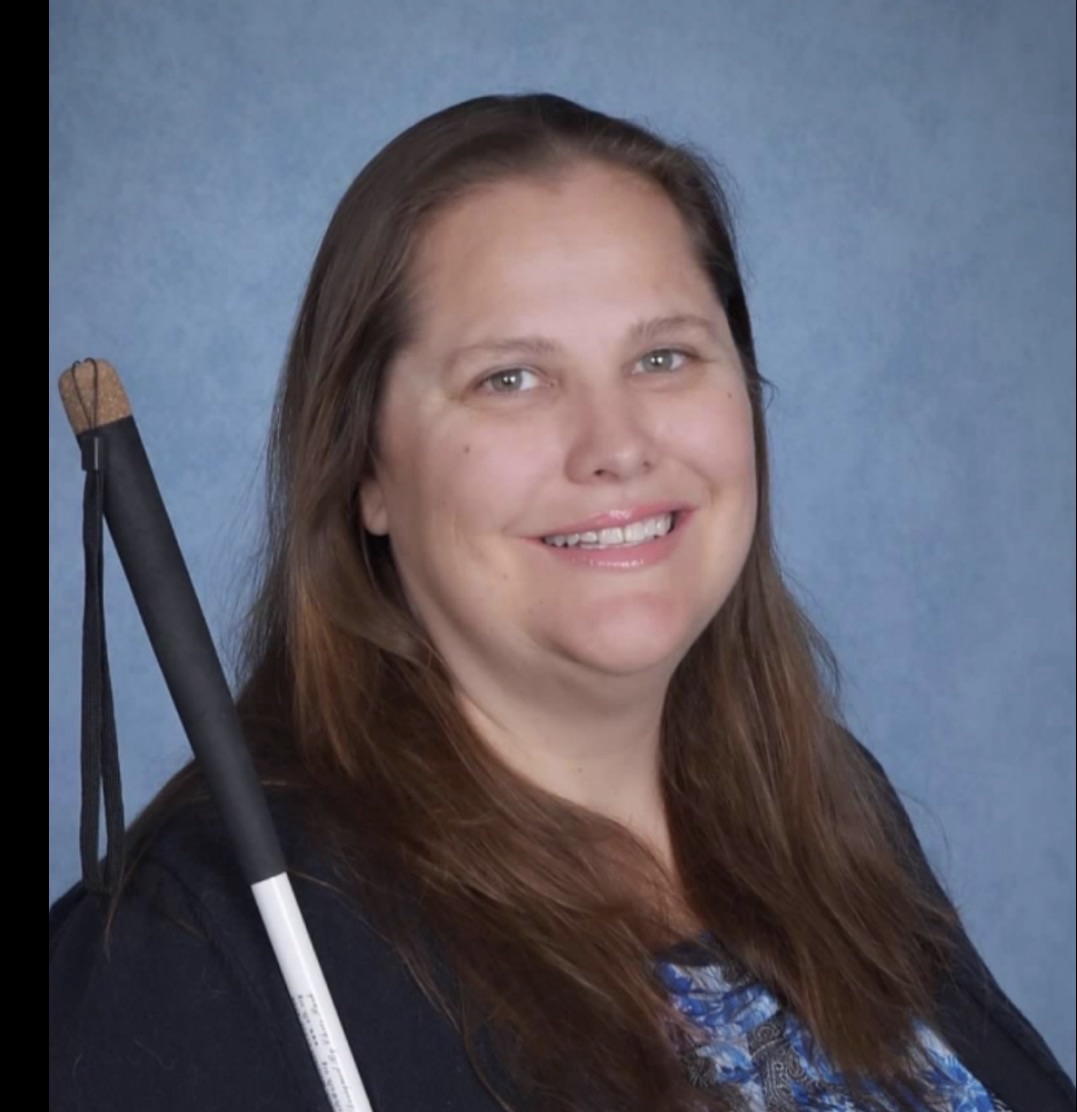
Image Description: Laura, a blind white woman with long blonde hair, is smiling at the camera and holding her long white cane.
Public Comment Submitted to HHS
On May 21, 2026, I submitted the following public comment concerning the Department of Health and Human Services interim final rule extending Section 504 compliance deadlines for accessible web content and mobile applications.
I also attached my full formal letter to Secretary Robert F. Kennedy Jr. as supporting context. That letter is attached below.
My submitted public comment:
I submit this public comment on RIN 0945-AA30, Docket No. HHS-OCR-2026-0133, and ask the Department of Health and Human Services to reconsider the interim final rule extending the Section 504 compliance deadlines for accessible web content and mobile applications.
President Mark Riccobono and the National Federation of the Blind have already made the civil rights and enforcement case against delaying these long-awaited accessibility protections. I write to build on that leadership by naming the public health issue: when accessibility is delayed, the burden does not disappear. It is transferred onto blind and disabled people.
Blindness itself is not the public health crisis. Ableism is.
I write with all of my hats on. I am a blind, neurodivergent, single mother navigating multiple chronic illnesses while raising a disabled child. My child and I both see specialists, so I know healthcare systems as a patient, as a parent, and as a public health professional. I also write as a sociologist, health educator, community organizer, advocate, Second Vice President of the National Federation of the Blind of San Francisco Chapter, and board member of the National Federation of the Blind of California.
These roles point to the same conclusion: accessibility is public health infrastructure. Transportation, information access, privacy, discrimination, communication, trust, emergency preparedness, and healthcare navigation are social determinants of health. Digital accessibility is now central to all of them.
An inaccessible patient portal can delay follow-up care, medication management, appointment scheduling, test result review, informed consent, benefits access, and private communication with a provider. When a blind patient cannot independently read a consent form, lab result, treatment option, or medication instruction, consent is not fully informed. It is mediated through someone else. That is a loss of privacy, autonomy, and agency.
Emergency information shows the stakes even more clearly. During COVID-19, testing information, vaccine appointments, exposure guidance, dashboards, and public health updates often moved through digital systems that were not reliably accessible. During California wildfire seasons, smoke conditions, power shutoffs, evacuation alerts, air-quality data, shelter information, and transportation options can determine safety. When that information is inaccessible, risk is created by the system, not by blindness.
Blind people are often described as a vulnerable population. I want to be precise: we are not vulnerable because we are blind. We are made vulnerable when health, safety, and emergency information is not accessible. Vulnerability is produced when public systems fail to provide the information people need to make decisions, protect their health, and act in time.
There is also a hidden cost. Repeatedly being blocked, rerouted, or forced to disclose private information creates cumulative stress. Public health and sociology already recognize that chronic stress from discrimination and exclusion can contribute to mental and physical health burdens over time. For blind and disabled people, inaccessible systems are part of that stress exposure.
I understand that implementation burden is real. Small clinics, rural providers, community health centers, public agencies, and human service programs need guidance, technical assistance, procurement support, and resources. Accessibility should not become another unsupported mandate. But disabled people should not continue carrying the cost of inaccessible systems while institutions are given more time.
HHS has spoken consistently about prevention, root causes, informed decision-making, and restoring trust in health institutions. Accessibility belongs squarely in that work. People cannot make informed health decisions when they cannot independently access the information. Prevention fails when the digital front door of care is closed.
Like the National Federation of the Blind, I urge HHS to reverse the delay and move accessibility protections forward. If HHS does not reverse course, any implementation period must be an active protection period, not a waiting period. Existing Section 504 obligations must remain in force, accessible alternatives must be available immediately, technical assistance must support compliance without weakening disabled people’s rights, and blind and disabled people must be included in implementation, testing, monitoring, and evaluation.
Accessibility is not charity. Accessibility is prevention. Accessibility is public health infrastructure.
Blindness is not the public health crisis. Ableism is. I respectfully ask HHS to act accordingly.
Please see attached letter for full comments and supporting context.
Respectfully submitted,
Laura Millar, MPH, M.A., MCHES
Oakland, California
www.lauramillar.com
Blindness is not the public health crisis. Ableism is.
Accessibility is not charity. It is prevention.
It is public health infrastructure.
Blind public health professional, sociologist, sexuality educator, consultant, coach, community organizer, and advocate. Second Vice President of the National Federation of the Blind of San Francisco Chapter, and board member of the National Federation of the Blind of California.
Her work focuses on ableism, blind inclusion, consent culture, accessibility, health literacy, sexuality, disability justice, and systems change. Based in Oakland, California.
Submission Record Tracking number mpf-supg-tpc8 Website Regulations.gov Docket ID HHS-OCR-2026-0133 RIN 0945-AA30 Rule title Extension of Compliance Dates for Nondiscrimination on the Basis of Disability; Accessibility of Web Content and Mobile Applications of Recipients of Departmental Financial Assistance
To find this comment after it posts, search Regulations.gov for tracking number mpf-supg-tpc8 or docket ID HHS-OCR-2026-0133. Comments are posted online after HHS reviews them.
laura@lauramillar.com · www.lauramillar.com
© 2026 Laura Millar. All rights reserved.
This post may be shared with attribution and a link back to www.lauramillar.com.
One reply on “A Blind Public Health Professional Responds: Public Comment Section 504 Accessibility Delay ”
[…] Companion DocumentRead my shorter public comment letter to Secretary Kennedy here. […]